domingo, 26 de junio de 2016

Extreme Poverty

EXTREME POVERTY

The World Bank estimates that 1.44 billion people live in extreme poverty and subsist on an average of US $1.25 or less a day. But extreme poverty is more than a lack of money or material resources. It is a condition whereby an individual lacks the opportunity to make meaningful choices that will sustain-ably improve his or her life. By this definition, the Multidimensional Poverty Index estimates that 1.6 billion people are living in extreme poverty.

Not only is extreme poverty a crushing and often deadly condition, but it is also a contributing factor to many of the world’s biggest problems: HIV/AIDS, child slavery, unsafe drinking water, corruption, the spread of Ebola, and 21st century terrorism and insurgency.


Resultado de imagen para extreme poverty in lima

Resultado de imagen para stop poverty images


Source: http://www.nuruinternational.org/why/extreme-poverty/

viernes, 24 de junio de 2016

WHAT IS AN ECOSYSTEM?
(form)

Resultado de imagen para ecosystemAn ecosystem includes all of the living things (plants, animals and organisms) in a given area, interacting with each other, and also with their non-living environments (weather, earth, sun, soil, climate, atmosphere). 

In an ecosystem, each organism has its' own niche or role to play.
Consider a small puddle at the back of your home. In it, you may find all sorts of living things, from microorganisms to insects and plants. These may depend on non-living things like water, sunlight, turbulence in the puddle, temperature, atmospheric pressure and even nutrients in the water for life.


What are the different types of ecosystems?
There are very many types of ecosystems out there, but the three major classes of ecosystems, sometimes referred to as ‘biomes’, which are relatively contained, are the following:
  • Freshwater Ecosystems
  • Terrestrial Ecosystems
  • Ocean Ecosystems   
Resultado de imagen para types of ecosystems


Sources: http://eschooltoday.com/

              http://www.conserve-energy-future.com


sábado, 18 de junio de 2016

energy transformation


ENERGY TRANSFORMATION

What is energy transformation?
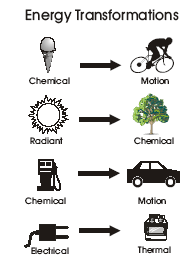
The conservation of energy principle states that energy can neither be destroyed nor created. Instead, energy just transforms from one form into another. So what exactly is energy transformation? Well, as you might guess, energy transformation is defined as the process of changing energy from one form to another.
There are so many different kinds of energy that can transform from one form to another. There is energy from chemical reactions called chemical energy, energy from thermal processes called heat energy, and energy from charged particles called electrical energy. The process of fission, which is splitting atoms, andfusion, which is combining atoms gives us another type of energy called nuclear energy. And finally, the energy of motion, kinetic energy, and the energy associated with position, potential energy, are collectively called mechanical energy.


Examples of energy transformation:
1. A toaster transforms electrical energy into thermal energy.
2. A blender transforms electrical energy into mechanical energy.
3. The sun transforms nuclear energy into ultraviolet, infrared, and gamma energy all forms of electromagnetic energy.
4. Our bodies convert chemical energy from food into mechanical and electrical energy to allow us to move.
5. A natural gas stove converts chemical energy from burning into thermal energy used to cook food.

What are the pros and cons on chemical and electrical energy?
1. Chemical energy is the most abundant source of energy available. Different chemical energy sources are copiously available worldwide. One of these common sources includes crude oil. Crude oil is produced from the process of chemical conversion occurred from the fossilized remains of dead animals and plants under great pressure exerted by the Earth’s layer. People have a very high dependency on crude oil that the status of all global economies is affected directly by price fluctuations of crude oil. Some other copious sources of chemical energy include wood, coal and other organic materials such as wax.

http://study.com/academy/lesson/energy-transformation-definition-types-examples.html

Copy of the Prezi